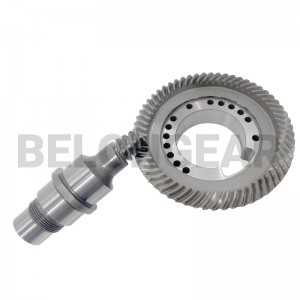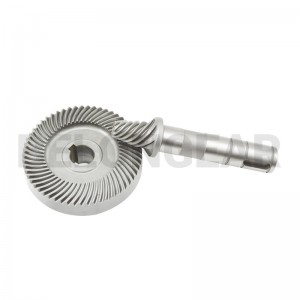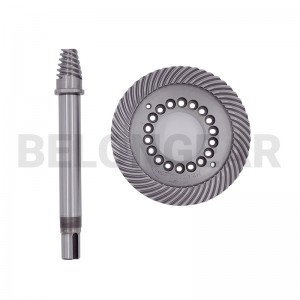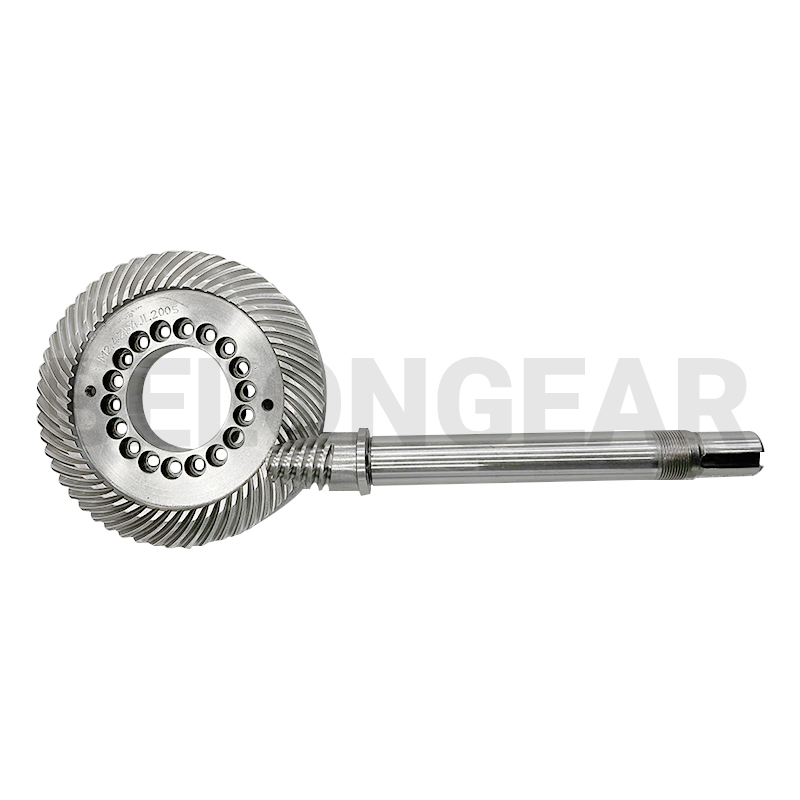
Two processing methods of hypoid gears
Hypoid bevel gears were first introduced by the Gleason Corporation in 1925 and have undergone a long-term development ever since. Today, although various types of domestic equipment are capable of machining such gears, high-precision and advanced manufacturing are still largely dependent on imported systems, particularly those from Gleason and Oerlikon.
In terms of finishing processes, two primary methods are commonly used: gear grinding and lapping. Each method places different requirements on the preceding cutting process. For grinding-based finishing, face milling is generally preferred, whereas lapping processes are typically paired with face hobbing.
Gears produced through face milling exhibit tapered tooth geometry, while those manufactured via face hobbing feature constant tooth height, meaning the tooth depth remains uniform from the large end to the small end.
The standard manufacturing sequence usually involves rough machining after initial preheating, followed by heat treatment, and then final finishing. For gears processed using face hobbing, an additional lapping and pairing step is required after heat treatment. In practice, even gear sets finished by grinding are often matched in pairs during assembly. Although, in theory, ground gears can be used interchangeably without pairing, real-world factors such as assembly deviations and system deformation make matched assembly a more reliable approach.