


Miter Gears: Types, Applications, Materials, and Design Advantages
Miter gears are a specialized form of bevel gears designed to transmit power and motion between intersecting shafts, most commonly at a 90-degree angle, while maintaining a 1:1 gear ratio. Unlike other bevel gears that change speed or torque, miter gears primarily change the direction of rotation without altering rotational speed, making them an ideal solution for compact and precise right-angle drive systems.
Due to their simplicity, reliability, and efficient power transmission, miter gears are widely used in automotive systems, industrial machinery, robotics, and hand operated tools.
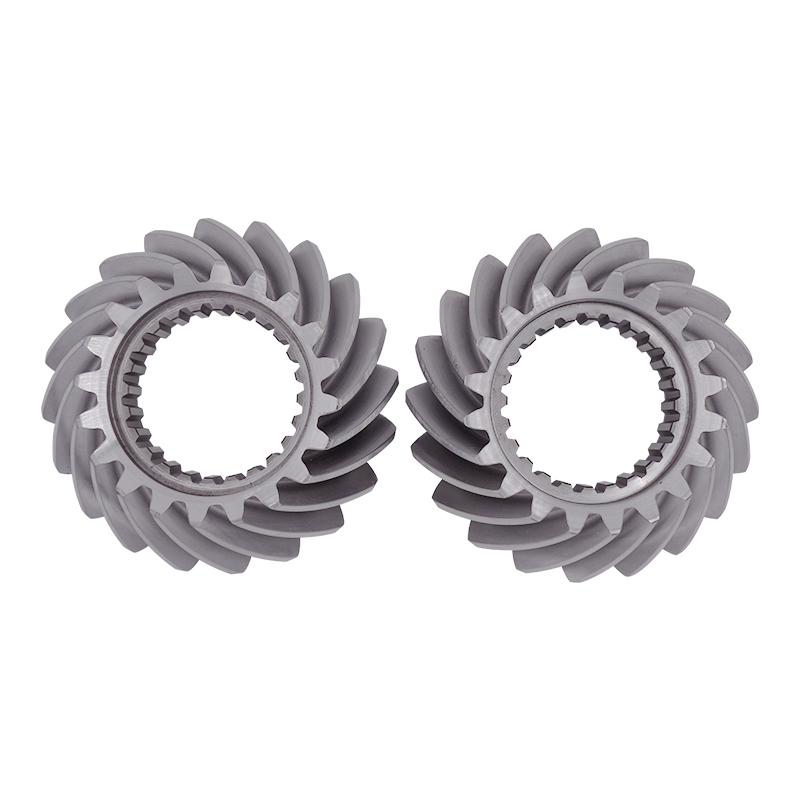
What Are Miter Gears?
A miter gear consists of two bevel gears with an equal number of teeth, resulting in an equal input and output speed. The shafts typically intersect at 90 degrees, though custom designs can accommodate other angles. Because of their balanced geometry, miter gears provide predictable performance and consistent motion control.
Miter gears are often selected when space constraints require a compact right-angle solution without speed reduction.
Types of Miter Gears
Miter gears can be classified based on tooth geometry, which directly affects noise level, load capacity, and operating smoothness.
Straight Miter Gears
Straight miter gears feature straight teeth that extend toward the apex of the gear cone. They are simple in design and cost-effective to manufacture.
Key characteristics:
-
Suitable for low speed and light load applications
-
Higher noise and vibration compared to spiral designs
-
Commonly used in hand tools and basic mechanical systems
Spiral Miter Gears
Spiral miter gears use curved, angled teeth that engage gradually, allowing smoother and quieter operation.
Advantages:
-
Higher load carrying capacity
-
Reduced vibration and noise
-
Suitable for high-speed and heavy-duty applications
However, spiral miter gears generate axial thrust loads, which must be considered during bearing and gearbox design.
Zerol Miter Gears
Zerol miter gears combine curved teeth with a zerol degree spiral angle, offering improved smoothness without significant axial thrust.
Benefits include:
-
Lower noise than straight miter gears
-
Minimal thrust load
-
Easy replacement for straight bevel gears without major redesign
Angular Miter Gears
While standard miter gears operate at 90 degrees, angular miter gears can be custom-manufactured for other intersecting angles such as 45°, 60°, or 120°, depending on application requirements.
These gears are commonly used in specialized machinery and custom mechanical assemblies.
Common Applications of Miter Gears
Miter gears are widely used wherever right angle power transmission with a constant speed ratio is required.
Automotive Systems
Miter gears are used in differential mechanisms and auxiliary drive systems, allowing smooth torque transfer between intersecting shafts.
Hand Tools
In tools such as manual drills, miter gears convert vertical handle rotation into horizontal chuck rotation efficiently and reliably.
Industrial Machinery
Applications include:
-
Conveyor systems
-
Mixers and agitators
-
Machine tools
-
Cooling tower fans
Robotics and Automation
In robotic joints and precision equipment, miter gears provide accurate motion control, compact design, and repeatable performance.
Materials Used for Miter Gears
Selecting the right material is critical for durability, performance, and cost efficiency.
Steel
Carbon and alloy steels offer high strength and wear resistance. S45C induction hardened steel is a popular choice for industrial miter gears requiring long service life.
Stainless Steel
Stainless steel miter gears provide excellent corrosion resistance, making them suitable for marine, food processing, and harsh environments.
Plastic Miter Gears
Materials such as acetal (POM), nylon, and polyoxymethylene are lightweight, corrosion-resistant, and operate quietly. These are ideal for low-load applications, office equipment, and consumer products.
Other Materials
-
Cast iron for vibration damping
-
Die-cast zinc for cost-sensitive applications
-
Brass for low friction and corrosion resistance
Advantages of Custom Miter Gears
Custom miter gears allow engineers to optimize:
-
Tooth profile and accuracy
-
Material and heat treatment
-
Mounting configuration and shaft angle
-
Noise, load, and lifespan performance
By working with an experienced custom miter gear manufacturer, businesses can ensure reliable performance even in demanding applications.
Miter gears are a proven and efficient solution for right-angle power transmission with a constant speed ratio. Available in straight, spiral, zerol, and angular designs, they can be tailored to meet a wide range of mechanical and industrial requirements. With proper material selection and precision manufacturing, miter gears deliver long-lasting, reliable performance across multiple industries.
Post time: Dec-31-2025