


TOP 10 Bevel Gear Manufacturers in China — Types, Materials, Advantages, and Why Choose Belon Gear
China’s gear industry serves a vast global market by supplying everything from simple right angle drives to precision bevel gears sets used in high-performance transmissions. For buyers evaluating bevel gear suppliers, it’s crucial to understand the product families, material and heat-treatment choices, and the value drivers that separate a commodity vendor from a true engineering partner. This article explains the common bevel gear types, the typical materials and processes that deliver long life and reliability, the advantages buyers seek from top-tier suppliers, and why Belon Gear is an outstanding choice when precision, reverse engineering, and validated performance matter.
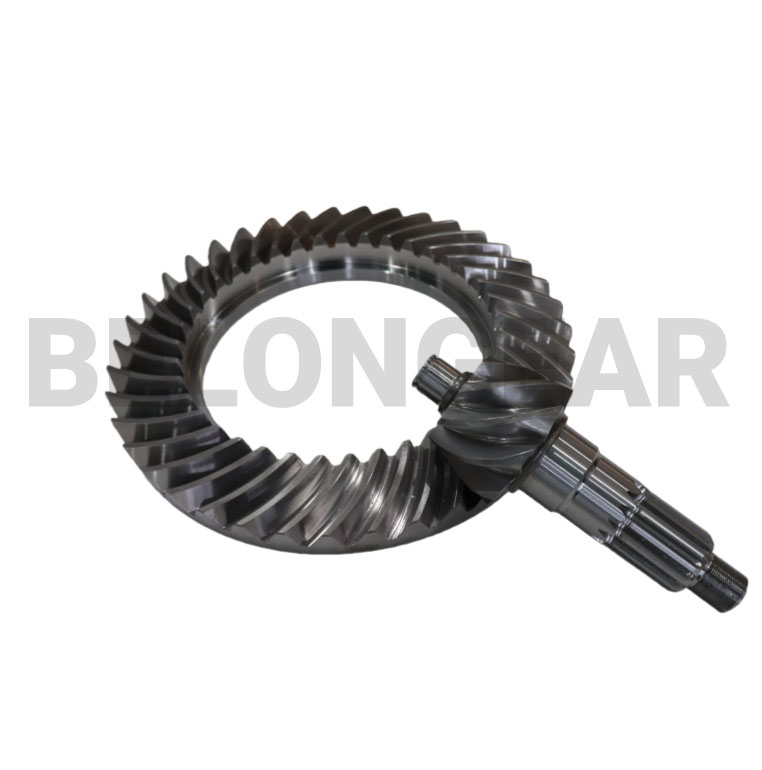
Bevel Gear Types: matching geometry to application
Bevel gears transmit power between intersecting shafts and come in several varieties, each optimized for specific function and duty:
Straight bevel gears — have straight-cut teeth on a conical blank. They are cost-effective and suitable for lower-speed, lower-noise-sensitive applications. Straight bevels are commonly used where axial loads are moderate and simple geometry is preferred.
Spiral bevel gears — feature curved teeth that engage gradually, producing smoother motion, higher load capacity, and lower noise than straight bevels. Spiral bevels are widely chosen for automotive differentials, precision gearboxes, and applications requiring continuous, high-load operation.
Hypoid gears — a variation of spiral bevels with offset axes, allowing smaller pinions and lower driveshaft heights in drivetrain layouts. Hypoid geometry provides high torque transmission and is favored where packaging and torque density are critical.
Miter gears — a special bevel type with a 1:1 ratio used to change the direction of rotation at right angles. Miter gears simplify design when speed change is not required.
Crowned or zero bevels and lapped/ground sets — for the highest precision, certain bevel gears are crowned and lapped or ground after heat treatment to optimize contact patterns and reduce noise. These are the choice for demanding transmissions, robotics, and precision machinery.
Understanding which bevel type fits an application depends on duty cycle, speed, torque, noise targets, and packaging constraints. A capable supplier will advise on geometry, tooth form, and finishing to meet those requirements.
Gear types, gear materials, design specifications and applications
Key Gear Materials in Gearbox
Gears are the primary components in a gearbox that transmit power. The material for gears needs to have high strength, hardness, and wear resistance.
Steel: The most common material used for gears. Steel alloys, such as carbon steel, alloy steel, and stainless steel, offer excellent strength and durability. Case-hardened steels, like 20MnCr5, are especially popular for their hard outer surface and tough core.
Cast Iron: Used in low-speed applications due to its good machinability and wear resistance. However, it is not suitable for high-stress environments.
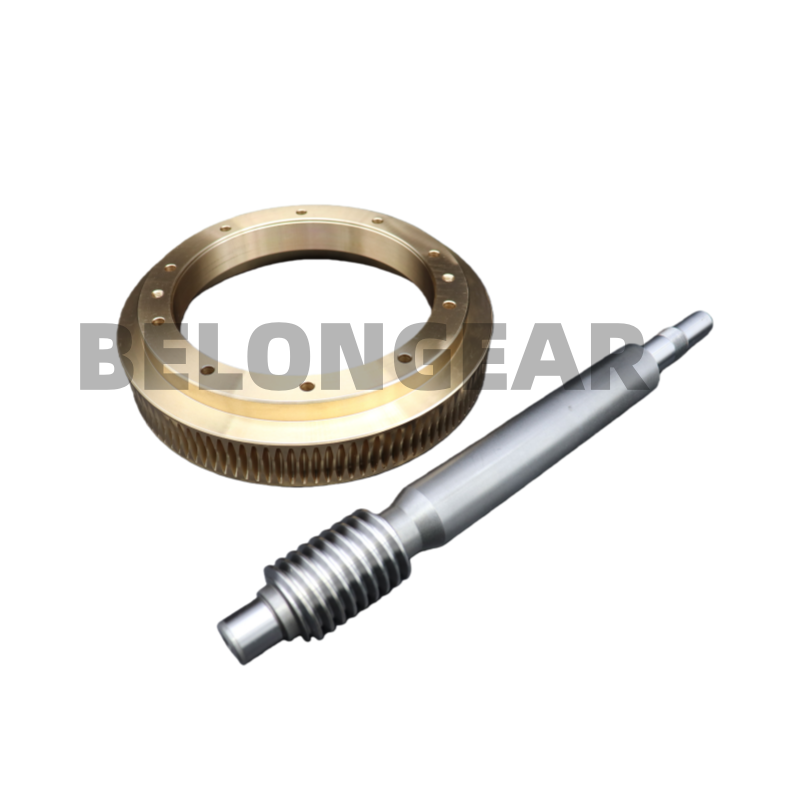
Brass and Bronze: These materials are used in applications where low friction is needed, such as in worm gears. They offer good wear resistance and self-lubricating properties.
Plastic: Engineering plastics like nylon and acetal are used in low-load, low-speed applications. They are lightweight and have good noise-dampening properties.
Materials and heat treatment: the backbone of performance
Material selection and heat treatment determine fatigue life, wear resistance, and core toughness. The most common and effective approaches include:
Alloy steels — grades such as 20CrMnTi, 20CrNiMo, 42CrMo and similar steels are widely used for bevel gears due to their good hardenability and core strength. These steels respond well to carburizing and quench/tempering cycles.
Carburizing (case hardening) — a surface hardening process that produces a hard, wear-resistant case with a ductile, tough core. Carburized gears resist surface pitting and scuffing while retaining toughness to absorb shocks.
Through-hardening — used where uniform hardness through the section is required, for smaller gears or where surface case hardness is not preferred.
Induction hardening — targeted hardening of tooth flanks that can provide wear resistance without the dimensional changes of furnace processes for certain designs.
Forged blanks — for heavy-duty applications, forged or precision-forged blanks provide superior grain flow and impact resistance compared to cast or machined blanks.
Grinding and lapping — after heat treatment, precision grinding and optional lapping are essential to achieve tight profile and lead tolerances and to produce a favorable contact pattern that reduces noise and enhances load sharing.
A robust supplier will combine correct steel chemistry, heat treatment cycles, and final finishing to achieve certified case depth, hardness profiles, and contact pattern evidence.
Advantages top bevel gear suppliers deliver
When evaluating suppliers, buyers should look beyond price and factory photos. Top suppliers bring measurable advantages:
End to end capabilities — in-house expertise from blank production to final grinding and inspection reduces lead time and enhances traceability. Full process control enables tighter tolerances and consistent quality.
Metrology and validation — modern inspection equipment (gear measuring centers, hardness testers, and pattern checking rigs) ensures each lot meets specified geometry, hardness, and contact performance.
Reverse-engineering competency — the ability to recreate worn or legacy parts from samples or limited drawings is essential for industries that rely on long-life assets and scarce spares.
Small-batch flexibility — many high-value applications require prototypes, pilots, or low-volume production runs. Suppliers that can economically support small batches without compromising process control add tangible value.
Application know-how — advising on design changes to improve life, reduce noise, or simplify manufacturing can save end-users cost and downtime over the product lifecycle.
Quality systems and traceability — documented heat-treatment records, material certificates, and first-article inspections provide the evidence base necessary for safety-critical and regulated industries.
These advantages separate commodity shops from engineering partners that deliver predictable, validated performance.
Why choose Belon Gear — focused value for global customers
Belon Gear positions itself as a precision bevel gear partner built around three core strengths: engineering-driven solutions, validated process control, and customer-focused service. Here’s what sets Belon Gear apart:
1. Precision grinding and verified finishing
Belon Gear invests in precision tooth generation and grinding capabilities that enable tight profile and lead tolerances. Post-heat-treatment grinding and, where required, lapping produce consistent contact patterns and low-noise operation. Each gear set is inspected with gear measuring centers and documented so customers receive measurable proof of compliance.
2. Rigorous hardness and material validation
Understanding that surface hardness, case depth, and core toughness govern long-term reliability, Belon implements thorough hardness level inspection procedures. Case-depth measurements, Rockwell/Vickers hardness maps, and material traceability reports accompany shipments. This validation reduces field failures and builds confidence in critical applications.
3. Reverse engineering and custom solutions
Belon excels at converting worn samples or legacy parts into improved, manufacturable designs. Using precision metrology, material analysis, and engineering simulation, Belon reconstructs geometry and recommends optimizations that increase durability and noise performance while preserving fit and function.
4. End to end process control
From choosing the optimal alloy and forging method to designing the heat-treatment cycle and applying precision grinding, Belon controls each process step. This vertical integration shortens feedback loops and allows rapid troubleshooting when process adjustments are necessary.
5. Flexible production with strict quality governance
Belon supports prototype runs, small batches, and scalable production with documented quality systems and first-article inspection capabilities. For customers in specialized industries—agriculture, mining, robotics, and industrial transmissions—this combination of flexibility and rigor is essential.
6. Application-driven engineering support
Belon’s engineering team partners with customers to analyze duty cycles, torque spectra, and noise requirements. This consultancy approach ensures the delivered bevel gear solution is fit-for-purpose and optimized for longevity and performance.
Practical selection checklist — what to request from Belon Gear
When engaging Belon (or any precision supplier), request:
Material certificates and heat-treatment reports.
Case depth and hardness maps for representative parts.
Gear measuring center reports showing profile, helix, and runout.
Contact pattern photos and documented optimization steps.
First-article inspection (FAI) protocol for prototype sets.
Evidence of reverse-engineering steps if the part originated from a worn sample.
Bevel gears are critical mechanical components whose life, noise, and reliability depend on correct geometry, material selection, heat treatment, and meticulous finishing. Top-tier suppliers deliver more than components: they deliver validated performance and engineering partnership. Belon Gear combines precision grinding, thorough hardness inspection, reverse-engineering expertise, and end-to-end process control—making it a compelling choice for international customers who require custom, reliable, and proven bevel gear solutions. If you require bespoke bevel gears backed by measurable quality evidence and engineering support, Belon Gear offers the capabilities to meet those demands.
Top 10 Gear Manufacturers In China
Post time: Dec-01-2025