


Carburizing vs Nitriding for Gear Durability Which Heat Treatment Delivers Better Performance
Surface hardening is one of the most decisive factors in determining the durability and performance of gears. Whether operating inside vehicle transmissions, industrial machinery, mining reducers, or high-speed compressors, the surface strength of gear teeth directly influences load capacity, wear resistance, deformation stability, and noise behavior during long-term operation. Among the many heat-treatment options, carburizing and nitriding remain the two most widely selected surface enhancement processes in modern gear manufacturing.
Belon Gear, a professional OEM gear manufacturer, applies both carburizing and nitriding technologies to optimize wear life, surface hardness, and fatigue strength based on application requirements. Understanding their differences enables engineers and buyers to choose the most suitable hardening method for real working conditions.
What is Carburizing?
Carburizing is a thermo-chemical diffusion process in which gears are heated in a carbon-rich atmosphere, allowing carbon atoms to penetrate the steel surface. The gears are then quenched to achieve a high hardness outer case while maintaining a tough and ductile core structure.
After treatment, carburized gears typically reach a surface hardness of HRC 58–63 (approx. 700–800+ HV). The core hardness remains lower—around HRC 30–45 depending on material providing high impact resistance and bending fatigue strength. This makes carburizing particularly suitable for high torque, heavy impact load, and variable shock environments.
Main benefits of carburized gears:
-
High wear resistance and excellent impact toughness
-
Thick case depth suitable for medium-to-large gears
-
Strong bending fatigue life for heavy load transmission
-
More stable under fluctuating or sudden torque
-
Common for automotive final drives, mining gearboxes, heavy machinery gears
Carburizing is often the go-to option for gears operating under severe mechanical stress.
What is Nitriding?
Nitriding is a lower temperature diffusion process in which nitrogen penetrates the steel surface to form a wear resistant compound layer. Unlike carburizing, nitriding does not require quenching, which significantly reduces the risk of distortion and allows components to maintain dimensional accuracy.
Nitrided gears generally achieve higher surface hardness than carburized gears—typcally HRC 60–70 (900–1200 HV depending on steel grade). Because the core is not quenched, internal hardness remains close to the original material level, ensuring predictable deformation stability and excellent precision.
Advantages of nitrided gears:
-
Extremely high surface hardness (higher than carburizing)
-
Very low deformation—ideal for tight-tolerance parts
-
Superior wear and contact fatigue performance
-
Improved corrosion and fretting resistance
-
Perfect for fine-pitch gears, planetary stages, and high-speed drives
Nitriding is often preferred in quiet-running, high-RPM, and precision-controlled conditions.
Carburizing vs. Nitriding — Depth, Hardness & Performance Comparison
| Property / Feature | Carburizing | Nitriding |
|---|---|---|
| Surface Hardness | HRC 58–63 (700–800+ HV) | HRC 60–70 (900–1200 HV) |
| Core Hardness | HRC 30–45 | Nearly unchanged from base metal |
| Case Depth | Deep | Medium to shallow |
| Distortion Risk | Higher due to quenching | Very low (no quench) |
| Wear Resistance | Excellent | Outstanding |
| Contact Fatigue Strength | Very high | Extremely high |
| Best for | Heavy torque, shock load gears | High-precision, low-noise gears |
Both improve durability, but differ in hardness distribution and distortion behavior.
Carburizing = deep strength + impact tolerance
Nitriding = ultra-hard surface + precision stability
How to Select the Right Treatment for Your Gear Application
| Operating Condition | Recommended Choice |
|---|---|
| High torque, heavy load | Carburizing |
| Minimal distortion required | Nitriding |
| Noise-sensitive high-RPM operation | Nitriding |
| Large diameter or mining industry gears | Carburizing |
| Precision robotic, compressor or planetary gear | Nitriding |
Selection must be based on load, lubrication, speed, design life, and noise control requirements.
Belon Gear — Professional Gear Heat Treatment & OEM Production
Belon Gear manufactures custom gears using carburized or nitrided metals according to engineering demand. Our material hardness control range, metallurgical inspection, and CNC finishing ensure stability in high-duty applications.
We supply:
-
Spur, helical & internal gears
-
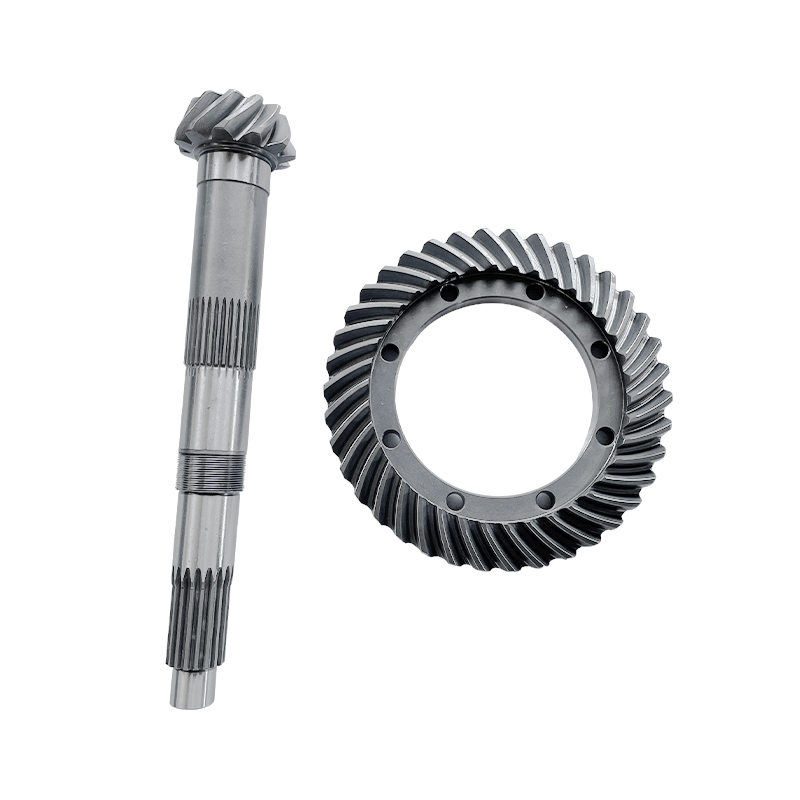
Spiral bevel & bevel pinions
-
Worm gears, planetary gears & shafts
-
Customized transmission components
Every gear is engineered with optimized hardness distribution and surface strength to maximize service life.
Conclusion
Both carburizing and nitriding significantly enhance gear durability—but their benefits differ.
-
Carburizing provides deep case strength and impact resistance, ideal for heavy power transmission.
-
Nitriding delivers higher surface hardness with minimal distortion, perfect for precision and high-speed motion.
Belon Gear helps customers evaluate load capacity, application stress, hardness range, and dimensional tolerance to select the most suitable treatment for every gear project.
Post time: Dec-09-2025