


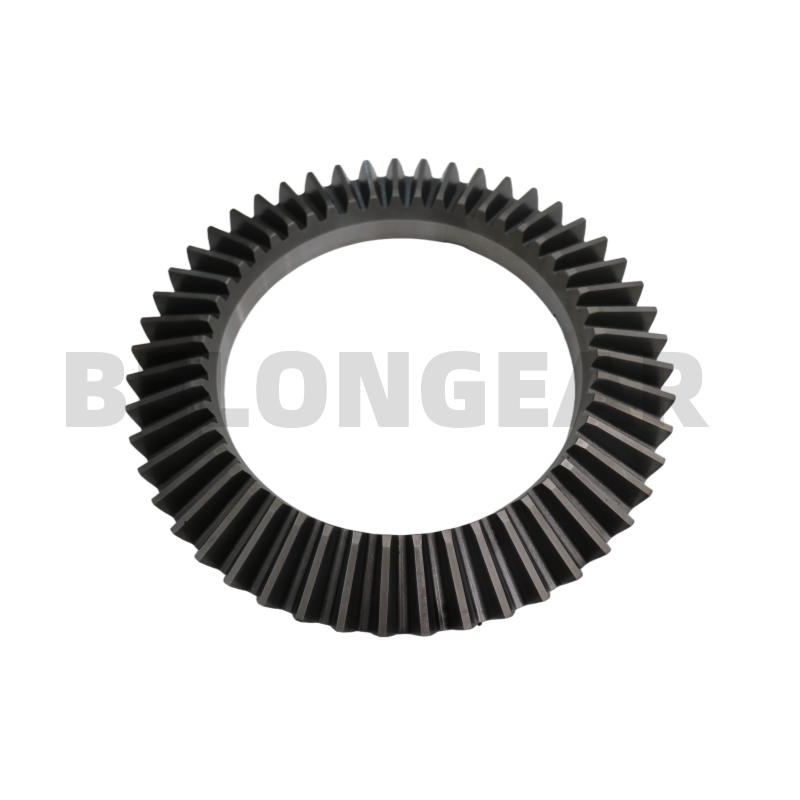
Carburizing Heat Treatment for Gears: Enhancing Strength, Durability & Performance
In modern power transmission systems, gears are expected to operate under extreme conditions high torque, continuous rotation, heavy loads, fluctuating speeds, and long working cycles. Traditional alloy steels, even with good intrinsic hardness, often cannot withstand such demanding applications without surface failure, tooth pitting, scuffing, wear, and fatigue cracks. To overcome these challenges, heat treatment becomes an essential step in gear manufacturing, and among all methods, carburizing stands out as one of the most effective surface hardening processes.
Carburizing (also called case hardening) is a metallurgical technique that introduces carbon into the surface layer of steel gears at high temperature. After quenching, the surface transforms into a hard martensitic case while the core retains toughness and shock resistance. This combination hard outside, tough inside is why carburized gears are widely used in automotive transmissions, industrial gearboxes, heavy machinery, mining equipment, aerospace drives, and robotics.
What is Carburizing?
Carburizing is a diffusion-based heat treatment performed at temperatures typically between 880°C – 950°C. During the process, gears are heated in a carbon-rich atmosphere. Carbon atoms diffuse into the surface layer of the steel, increasing its carbon content. After soaking for the required time, gears are quenched rapidly to form a hardened martensitic case.
The depth of carbon penetration is called case depth, and can be controlled by varying temperature, holding time, and carbon potential. Generally, the target case depth ranges from 0.8 mm to 2.5 mm, depending on the application, gear size, and required load capacity.
Why Do Gears Need Carburizing?
Carburizing is not only about increasing hardness; it significantly improves performance in real working conditions. Key benefits include:
-
High Wear Resistance
The hardened surface prevents abrasive wear, pitting, micro-spalling, and surface fatigue damage. -
Higher Load-Carrying Capacity
Carburized gears can carry heavier loads and transmit higher torque without deformation. -
Improved Tooth Bending Strength
The soft ductile core absorbs shock and impact, reducing tooth fracture risk. -
Superior Fatigue Life
Carburized gears can operate for tens of thousands of hours in high-cycle conditions. -
Reduced Friction & Heat Generation
Smoother tooth engagement ensures quieter and more energy-efficient transmission.
Because of these advantages, carburizing has become the standard heat treatment for automotive gears, especially for bevel gears, helical gears, ring gears, differential gears, and transmission shafts.
The Carburizing Process Step by Step
A complete carburizing process includes several stages, each affecting final performance:
1. Pre-Heat and Austenitizing
Gears are heated to the carburizing temperature where steel transforms into austenite. This structure allows carbon to diffuse easily.
2. Carbon Diffusion and Case Formation
The gears are held in a carbon-rich environment (gas, vacuum, or solid carburizing agent). Carbon atoms diffuse inward, forming a hardened case after quenching.
3. Quenching
Rapid cooling transforms the high-carbon surface layer into martensite—extremely hard and wear-resistant.
4. Tempering
After quenching, tempering is required to reduce brittleness, improve toughness, and stabilize the microstructure.
5. Final Machining / Grinding
Heat-treated gears often undergo finish grinding or lapping to achieve accurate tooth geometry, smooth contact pattern, and optimal noise control.
Types of Carburizing for Gears
Several carburizing technologies have been developed, each with unique advantages.
| Method | Characteristics | Applications |
|---|---|---|
| Gas Carburizing | Most common, controlled carbon atmosphere | Automotive gears, industrial gearboxes |
| Vacuum Carburizing (LPC) | Clean, uniform case depth, minimal distortion | High-precision gears, aerospace |
| Pack Carburizing | Traditional solid carburizing medium | Low-cost, simple, less controllable |
| Carbonitriding | Carbon + ammonia atmosphere adds nitrogen | Improved hardness and wear performance |
Among them, vacuum carburizing is increasingly preferred for precision gears due to its uniform case distribution, environment-friendliness, and low distortion.
Material Selection for Carburizing
Not all steels are carburizing-friendly. Ideal materials are low-carbon alloy steels with good hardenability and core toughness.
Common carburizing steels:
-
16MnCr5
-
20CrMnTi
-
8620 / 4320 Steel
-
18CrNiMo7-6
-
SCM415 / SCM420
These steels allow deep case hardening while maintaining a strong, ductile core—perfect for heavy-duty gears.
Quality Factors in Carburized Gears
To achieve stable performance, several critical factors must be controlled:
-
Surface carbon concentration
-
Effective case depth (ECD)
-
Retained austenite level
-
Distortion and dimensional stability
-
Hardness uniformity (58–62 HRC on surface)
A well-controlled carburizing process ensures gears operate reliably for years with minimal maintenance.
Applications of Carburized Gears
Carburizing is widely used in industries where reliability, precision, and high load endurance are essential:
-
Automotive gearboxes & differential systems
-
Tractor, mining and heavy duty equipment
-
Robotics and automation gears
-
Wind turbine gearboxes
-
Aerospace drives and turbine transmissions
-
Marine propulsion systems
Wherever gears must withstand shock, pressure and long term rotational stress, carburizing is the most trusted solution.
Carburizing heat treatment transforms ordinary steel gears into high-performance components capable of enduring demanding environments. The process strengthens the surface against wear and fatigue while preserving a tough inner core for impact resistance. As machinery evolves toward higher power density and efficiency, carburized gears will remain a key technology in modern engineering and power transmission systems.
Post time: Dec-10-2025