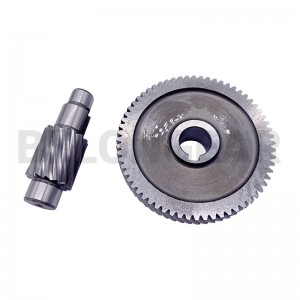
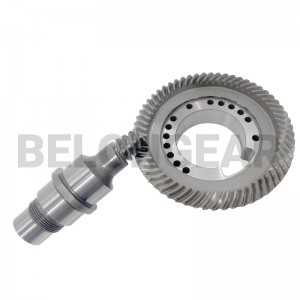
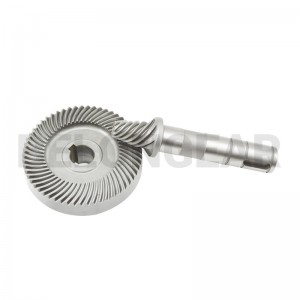
The helical pinion shaft is the critical high-speed input component within a helical gearbox, responsible for transmitting torque while ensuring smooth, quiet operation. At Belon Gear, we specialize in engineering pinion shafts that balance extreme surface hardness with core toughness, specifically designed to withstand the axial and radial loads typical of heavy-duty industrial reducers.
Leveraging our position as one of China’s top ten gear enterprises, we provide vertically integrated manufacturing—from raw material forging to final tooth grinding—ensuring that every shaft, such as our 354mm long series, meets the highest standards of the global power transmission industry.
Processing a 354mm helical pinion shaft requires specialized equipment to maintain concentricity and pitch accuracy over a long span.
- CNC Hobbing & Grinding: We utilize high-speed CNC hobbing for initial tooth formation, followed by precision grinding to achieve ISO 6 or ISO 7 accuracy grades.
- Micro-Geometry Modification: To compensate for potential shaft deflection in 354mm applications, our engineers apply tooth crowning and lead modification. This ensures an optimal contact pattern under load, reducing NVH (Noise, Vibration, and Harshness).


Inspection

Reports

Packages